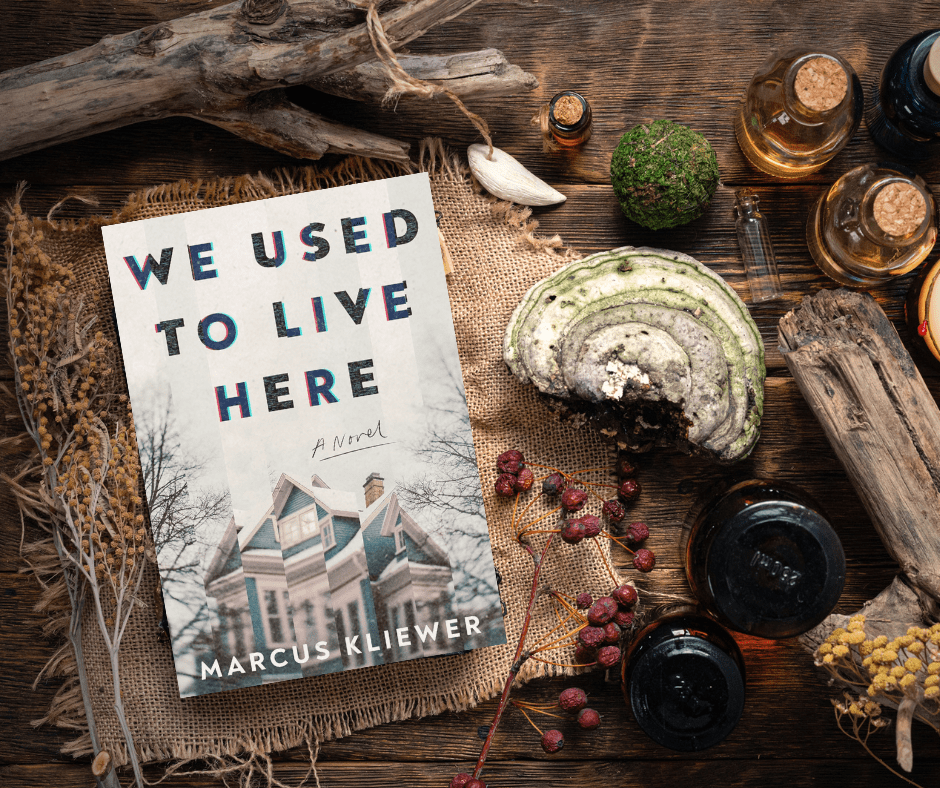
A Haunting Dive into the Dark Corners of Home

We Used to Live Here, by Marcus Kliewer, is a fresh and eerie psychological horror that follows Eve and Charlie, a young queer couple, as they take on their latest house-flipping project in the dense, mist-laden woods of the Pacific Northwest. What begins as an exciting and ambitious project quickly devolves into a nightmare when a stranger from the house’s past arrives and, with his family, disrupts their lives in terrifying and inexplicable ways. Kliewer’s novel captivates readers by delving into themes of memory, trauma, and the haunting effects of unresolved history. Let’s explore some of the elements that make this novel a standout in modern horror literature.
1. Plot Overview
At the core of We Used to Live Here is the plot line of Eve and Charlie, an optimistic couple hoping to transform a dilapidated old house into a dream property. Their work takes a dark turn when a stranger, Thomas, knocks on their door with a seemingly simple request—to show his family around the house he once lived in. Eve, a character plagued by self-doubt and a tendency to people-please, reluctantly agrees, setting off a chain of unsettling events. The stranger and his family soon overstay their welcome, leading to inexplicable occurrences that blur the lines between reality and imagination.
As the atmosphere in the house shifts, so does Eve’s grip on what is real, pulling her into a psychological struggle that reveals the darker side of the home’s history—and the secrets it may hold. Kliewer skillfully builds suspense, keeping readers on edge as Eve’s desperation grows and the boundary between sanity and madness is stretched.
2. Complex and Relatable Characters
Eve and Charlie’s relationship and individual character arcs bring depth to the horror elements of the story. Eve is particularly complex; her people-pleasing nature becomes a critical aspect of the narrative, pushing her into vulnerable and terrifying situations. Her inner conflict and self-doubt make her a relatable protagonist who reflects real-world anxieties, particularly in situations where politeness and self-sacrifice can lead to danger. Charlie, though less central, provides emotional support but is also put to the test as their relationship is strained by the haunting events.
By placing Eve’s psychological journey at the forefront, Kliewer invites readers to see horror not only as external but also as an internal confrontation with personal fears and weaknesses
3. Atmosphere and Writing Style
Kliewer’s atmospheric writing is one of the highlights of the novel. The Pacific Northwest setting—a remote, heavily forested area—adds an extra layer of isolation and tension to the story. Kliewer uses this setting to create a haunting ambiance filled with fog, shadows, and an omnipresent sense of dread. His descriptive prose pulls readers into the eerie, almost claustrophobic environment of the house, where every room, creak, and shadow seem alive with mystery. This atmosphere is heightened by Kliewer’s slow-building suspense, which keeps readers questioning what is real and what might be Eve’s distorted perception
4. Themes: Memory, Trauma, and the Hauntings of the Past
The themes in We Used to Live Here explore memory and the impact of unresolved trauma on the present. The house, a character in itself, seems to hold memories and traumas of its past occupants, which bleed into Eve and Charlie’s lives, challenging the couple’s sense of reality. Through Eve’s interactions with Thomas’s family, Kliewer raises questions about how our spaces and our memories can shape who we are and haunt us in unforeseen ways. The novel also explores the blurred boundary between kindness and vulnerability—Eve’s empathy toward Thomas’s family, though well-intentioned, serves as her entry point into a nightmare
5. Conclusion: A Must-Read Psychological Horror
We Used to Live Here is a compelling addition to the psychological horror genre. Marcus Kliewer’s novel stands out for its intricate blend of relatable characters, complex themes, and a richly atmospheric setting. It’s a story that not only provides scares but also invites readers to reflect on the psychological costs of unresolved history and the vulnerabilities of human nature.
For horror enthusiasts and those who enjoy a psychologically complex tale, We Used to Live Here is an unsettling, thought-provoking read that lingers long after the final page. With its masterful storytelling and spine-tingling atmosphere, this novel is a strong 4.5-star recommendation and a reminder of the power of horror to delve deep into the human psyche.

 Book Babe Society
Leave a comment